The GTM signal index
A weekly one-number signal index — nine enterprise software companies named a new head of security in the last 30 days against three in the 30 before — with the method, a logo…
- Built in
- 16 min
- Capabilities
- 4
- Live API calls
- 17

The prompt
Paste it into any coding agent with the Trayo MCP connected.
- + any MCP client


Use Trayo to build a weekly signal index — one quotable number.

Pick a measurable trend in my category, for example companies hiring their first GTM engineer, and compute it over the last 30 days against the 30 before that. Output the headline number and the direction of change, the method in one paragraph so it is defensible, and a logo wall of the companies behind it. It should be short enough to post as-is and specific enough that someone could check it.
What this app asked Trayo for
Every name, number and email on the page came back from one of these. None of it was typed in.
- Reads your workspace
What you sell, who you sell to, and the buyer personas already saved in Trayo.
- Finds companies
Surfaces accounts that match your ICP, plus lookalikes of the ones already working.
- Builds your account list
Imports, updates and organises accounts so the work survives the session.
- Watches for buying signals
Standing watches for job changes, funding and the other moments worth a reply.
Take the tour
The same run as the video above, one stop at a time.
- 01
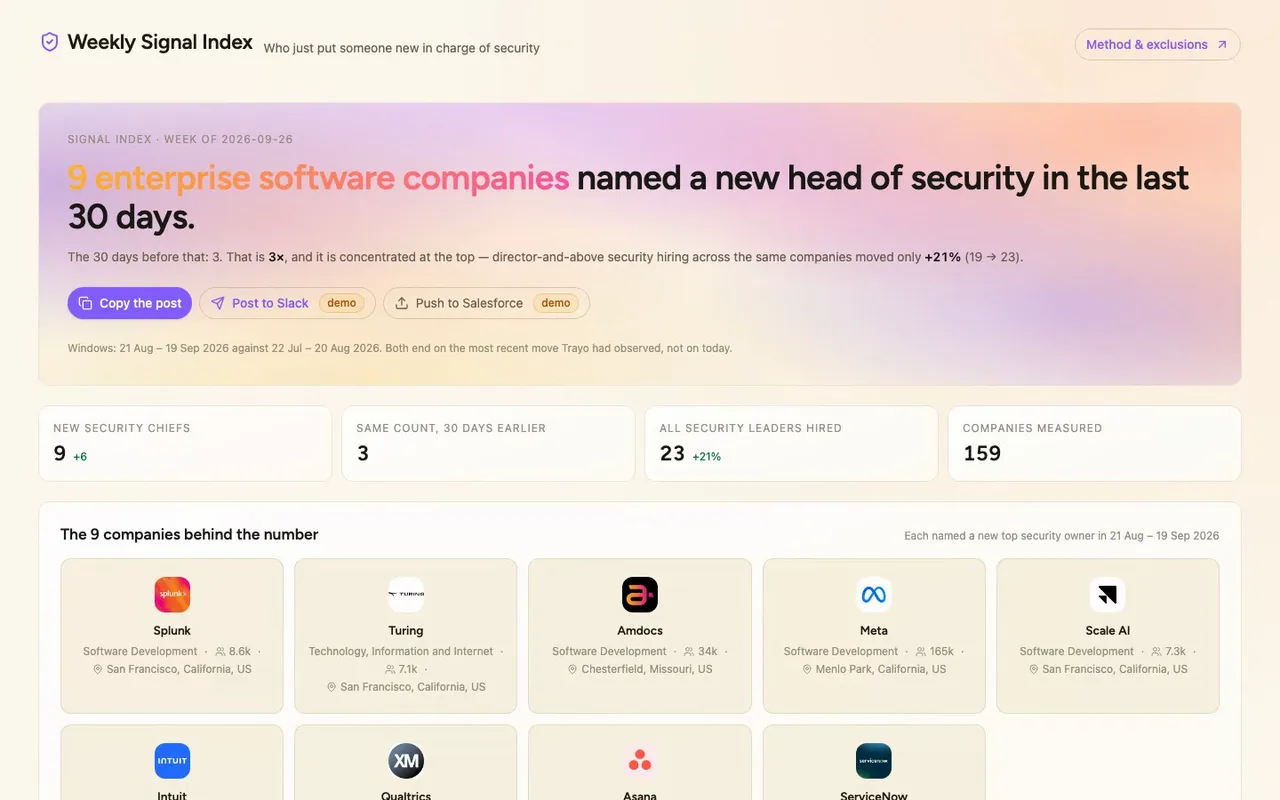
Before a rep posts about the security market, they need one number they can defend. This is a weekly index for our reps: how many enterprise software companies named a new head of security in the last 30 days, with the method and the post ready to copy.
- 02
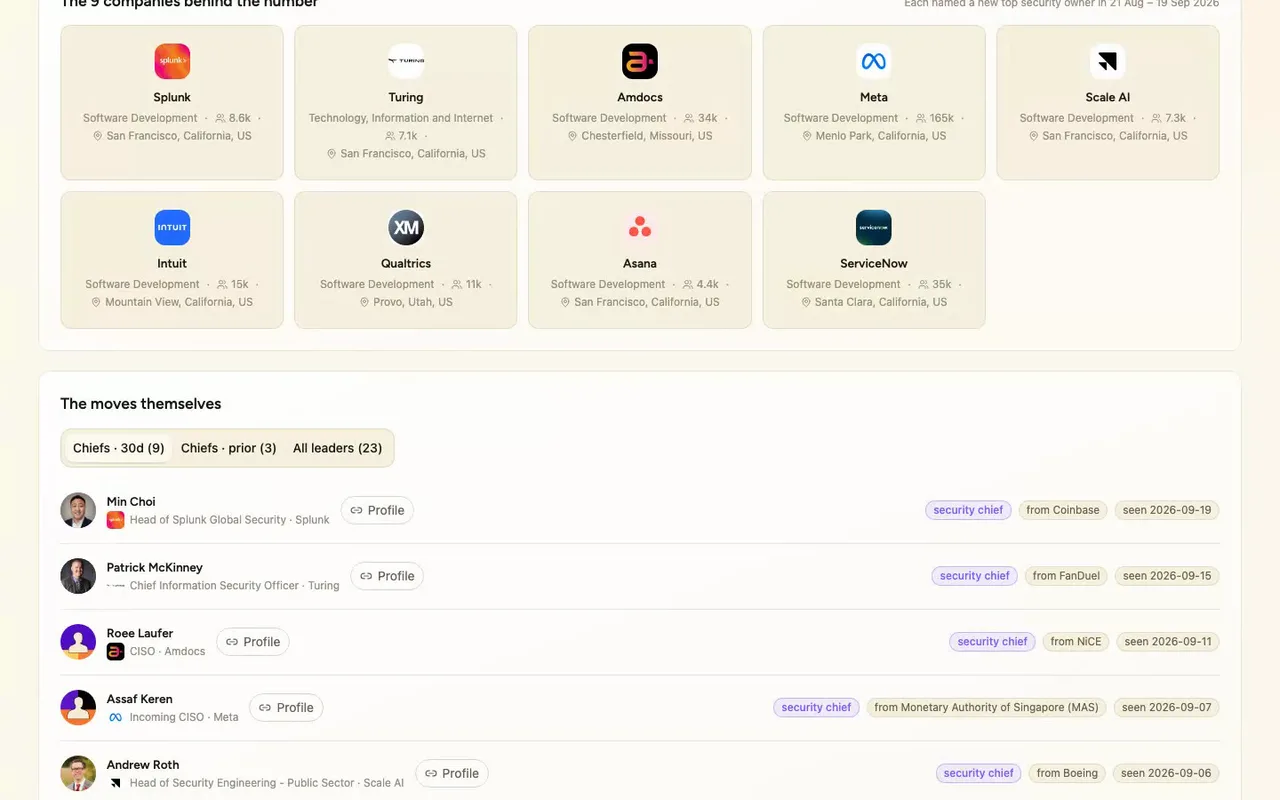
Nine companies in a 159-company universe named a new head of security in the 30 days to 19 September, against three in the 30 before.
- 03
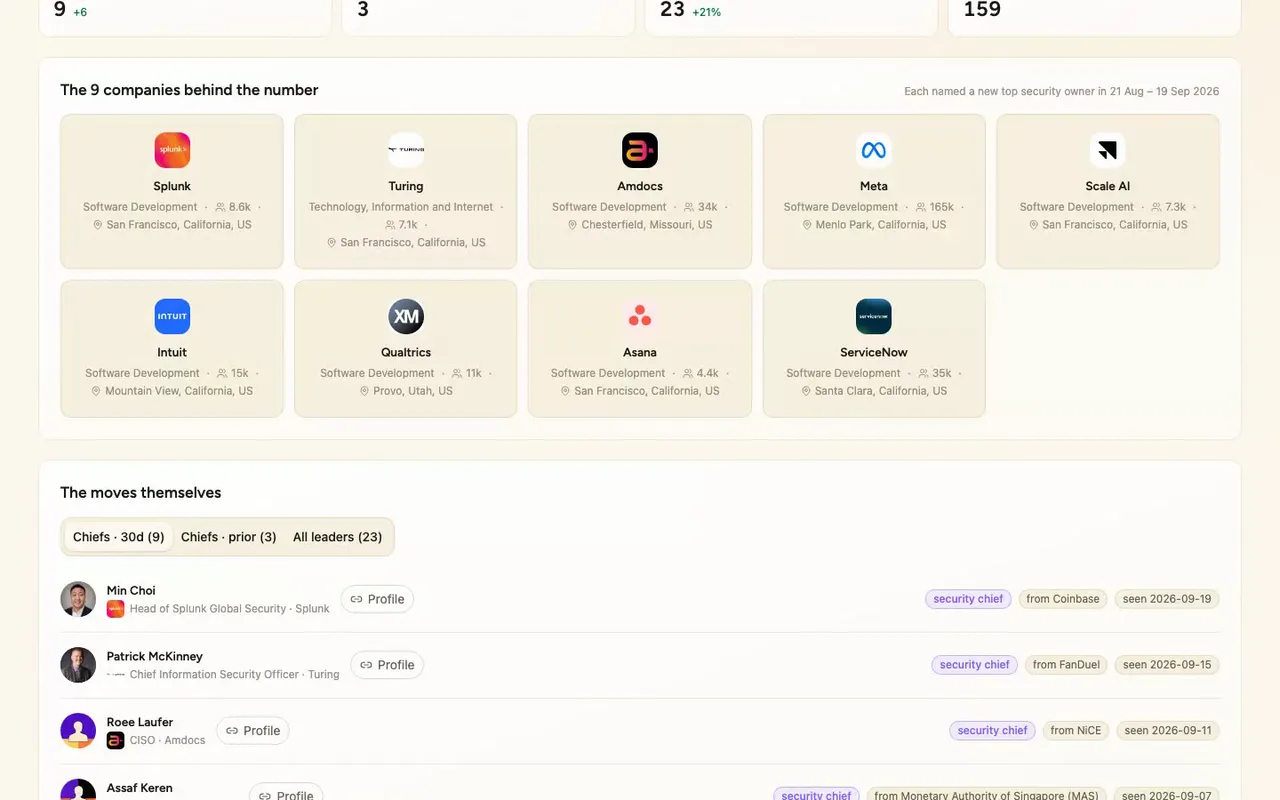
Here's the logo wall: Meta, Amdocs, ServiceNow, Intuit, Qualtrics, Splunk, Scale AI, Turing and Asana.
- 04
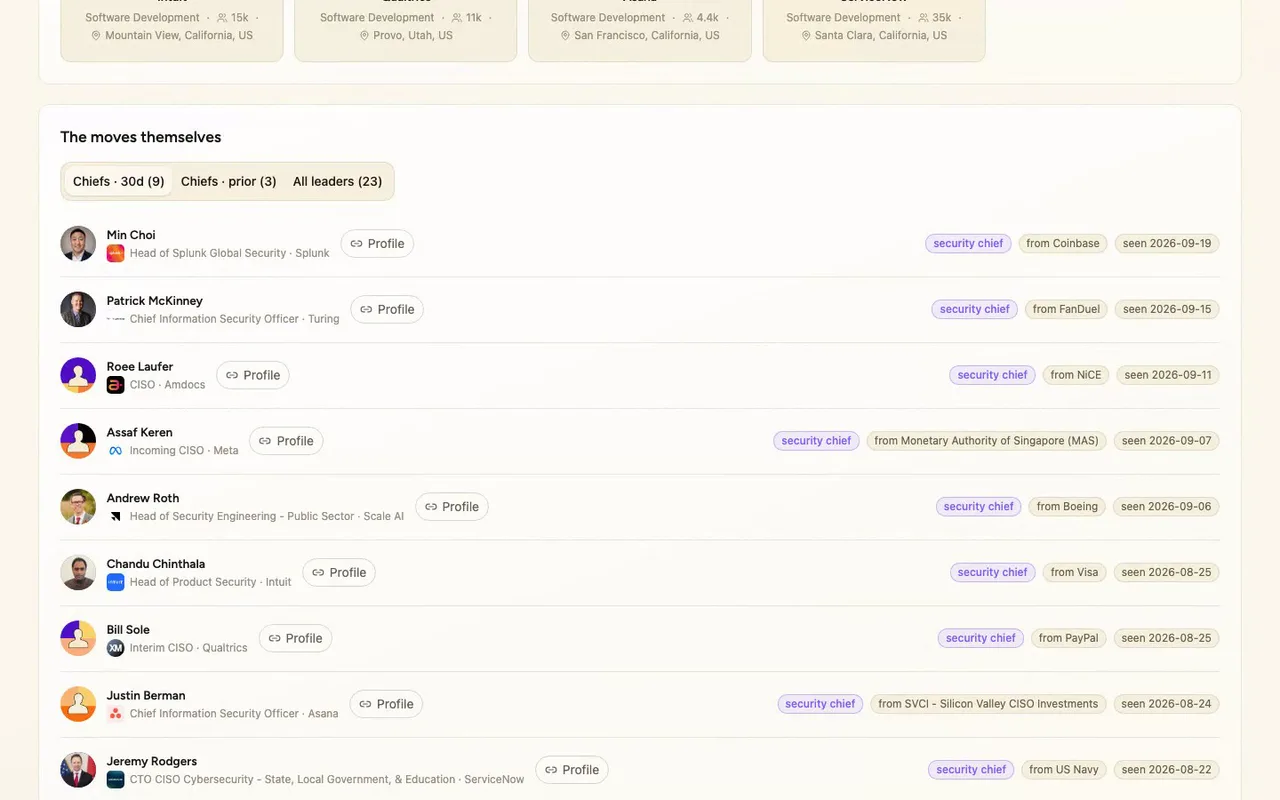
Under each logo, the named person behind the appointment and where they came from, as Trayo returned them.
- 05
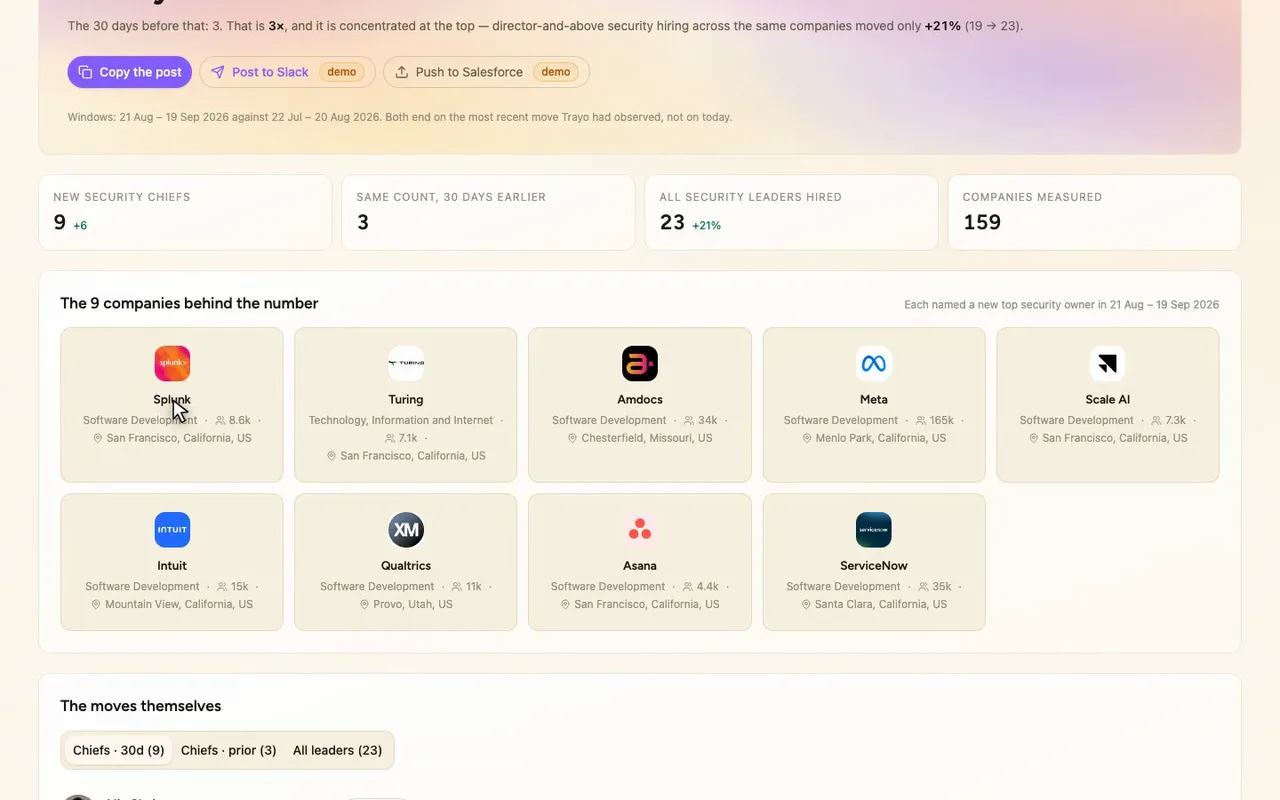
Hover Splunk and you get the person and the company they left.
- 06
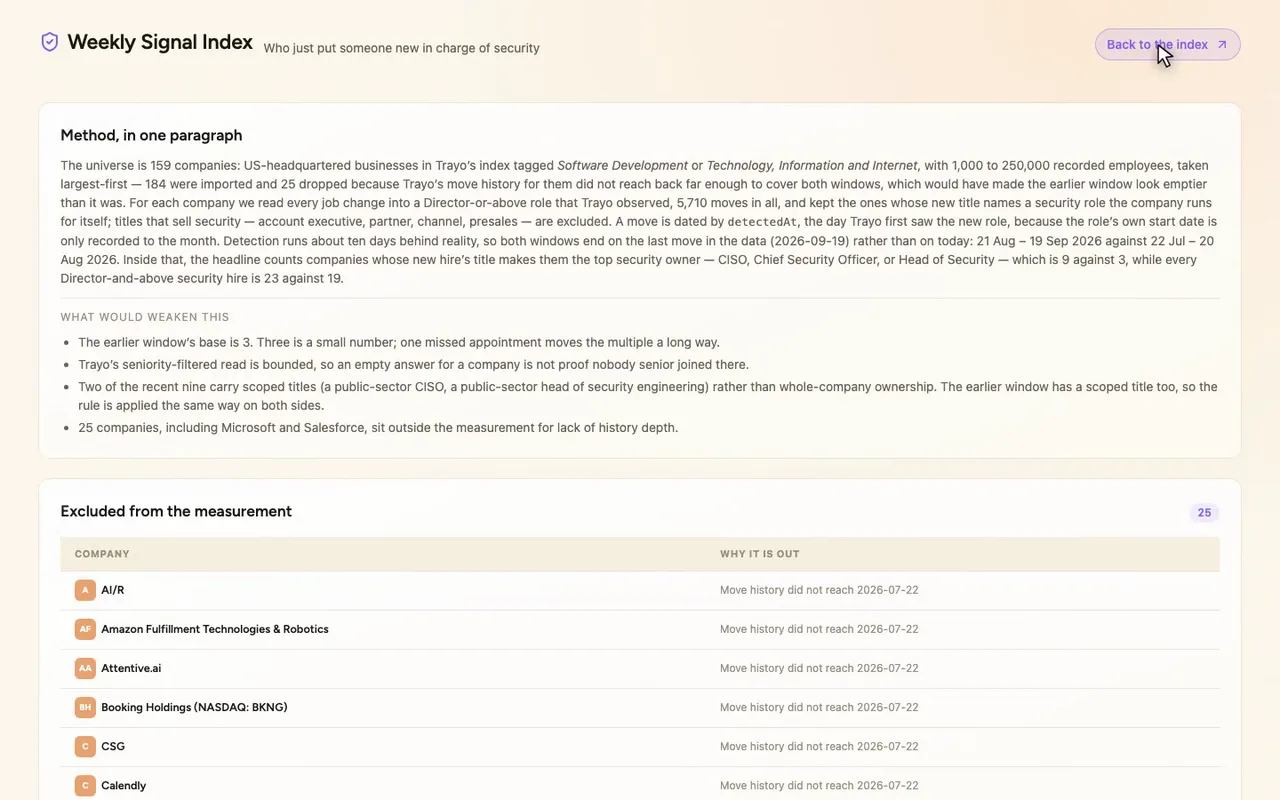
Method and exclusions is its own route, so the caveats travel with the number.
How it was built
The data behind each screen, and what's faked for the demo.
A sales rep at a company that sells to security teams, in this case Wiz, gets one number each week that they can post as their own: nine enterprise software companies named a new head of security in the 30 days to 19 September 2026, against three in the 30 days before. That’s a 3x jump. The page shows the number, a paragraph on how it was computed, a logo wall of the nine companies, the named people behind each appointment and where they came from, and the post itself with a copy button. A second route, /method, holds the caveats and the list of companies left out of the count.
Without this, a rep who wants to say something specific about the market has to pull job-change data by hand, decide what counts as a security leader, and count across two date windows in a spreadsheet that is stale by the time it’s posted. The number here can be checked, because each of the nine has a named person, a previous role and a date. It also isn’t generic security-hiring noise. Director-and-above security hires across the same companies moved only from 19 to 23, so the jump is specific to top-level appointments.
I started by checking the workspace, then used POST /v1/find to pull 200 US-headquartered companies tagged Software Development or Technology, Information and Internet, with 1,000 to 250,000 employees. A dedupe and a pass to drop non-companies like “Stealth Startup” left 184, which I imported with POST /v1/accounts/batch. I first tried the workspace’s own signal pipeline: a discovery run over all 184 accounts across three hiring signals, and a second over one account across all ten signals with a 365-day lookback. Both settled with zero events and no error or blocked signal, so I switched to job-change data. I ran POST /v1/job-changes/search per account at seniority “head” and got 5,710 Director-and-above moves. Each had a person, both roles, and the date Trayo first observed the new role. I kept only security roles a company runs for itself and excluded titles that sell security, which is most of what the word matches. That left 42 appointments across the two windows, nine of them at chief level in the latest one: Meta, Amdocs, ServiceNow, Intuit, Qualtrics, Splunk, Scale AI, Turing and Asana. The faces and logos are the ones Trayo returned. I excluded 25 of the 184 companies, Microsoft and Salesforce among them. Their move volume is high enough that the paged read didn’t reach back far enough to cover the earlier window, which would have made that window look artificially empty.
The data is real, and the numbers are Trayo’s. The multiple is fragile, though. A base of three is small, and /method says so. The Slack and Salesforce buttons are previews that show what would have been sent and send nothing. I left the 184 imported accounts in the workspace rather than removing them, because removal is final and there was nobody to ask.